
System connected
Agents work with the applications your teams already use.
AI Agents & Workflow Automation
We connect AI agents to email, CRM, ERP, databases and operational tools so they can read, decide, update records and complete repeatable tasks with approval controls and safe fallback paths.
Agents work with the applications your teams already use.
Important steps can stay behind approval or review gates.
Retries, fallbacks and exception handling improve dependability.
Track actions, tool calls and outcomes across the process.
The business problem
Many workflows involve reading unstructured input, finding context, updating systems and routing work to the right person. We automate the predictable parts while keeping people in control of the critical ones.
What this service changes: it converts an unclear opportunity into a structured, reviewable path with clear decisions, owners and outputs.
What we do
Each capability addresses a specific decision, dependency or delivery need. Use them independently or combine them into one complete engagement.
Define states, triggers, approvals and exception paths clearly.
Give agents controlled access to business applications and APIs.
Coordinate specialised agents, rules and deterministic services.
Handle emails, documents, requests and other unstructured inputs.
Send the right cases to humans before sensitive actions occur.
Monitor failures, bottlenecks and output quality for ongoing refinement.
How the service comes together
The sequence creates visible decision points so your team knows what has been learned, what has been approved and what happens next.
What you receive
The engagement produces practical artefacts, not only discussion. Outputs are structured to support approval, implementation and handover.
Delivery approach
The exact timeline depends on scope, data and integrations. Every engagement is organised around evidence, review points and production readiness.
Understand goals, constraints and the current operating context.
Define the solution direction, priorities and success measures.
Produce and review the agreed working outputs with stakeholders.
Confirm handover, next phase actions and production readiness.
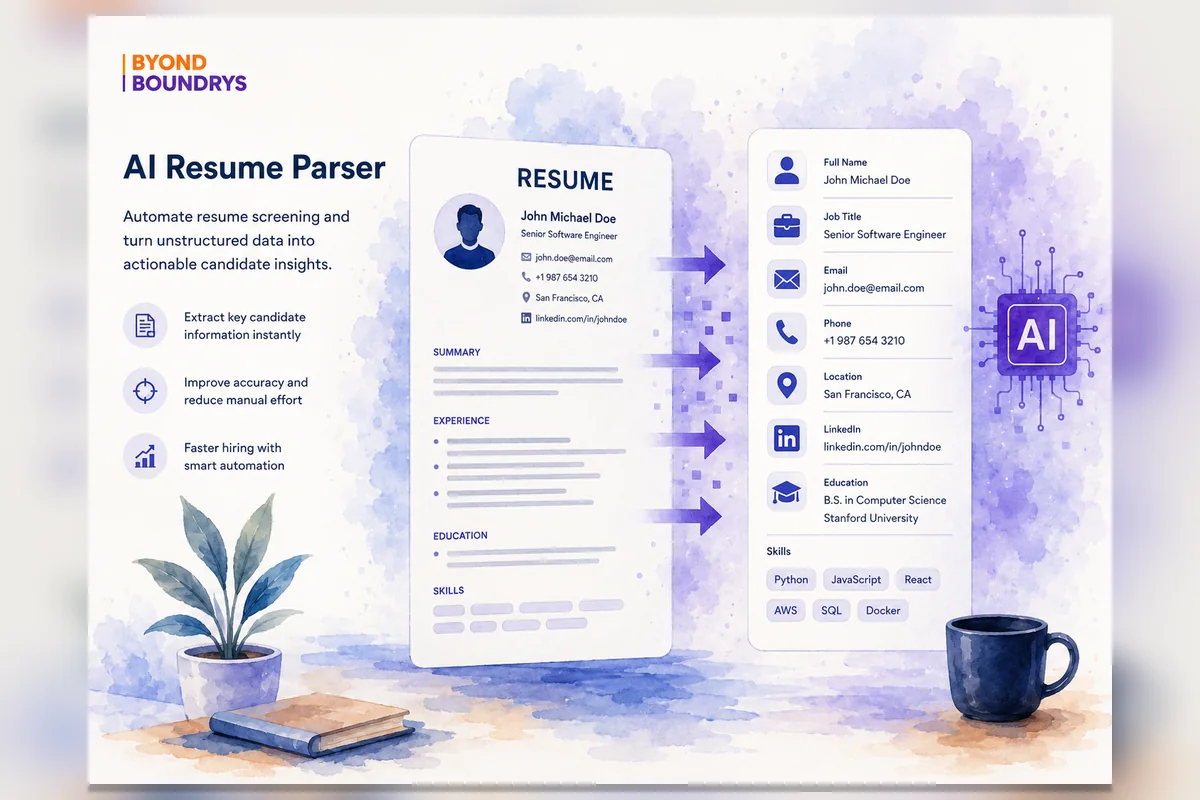
Related delivery evidence
Simplify Job Search was developed as a two sided job search and hiring platform that supports both candidates and recruiters. This case study focuses on the recruitment side platform, which helps HR teams, companies, freelancer recruiters,…
Read the case studySecurity and responsible operation
We adapt governance, review and operational controls to the service, workflow, users and level of risk involved.
Frequently asked questions
Every engagement is shaped around the workflow, data, security and operating environment involved.
Yes, but only within the permissions and safeguards we design. Critical actions can be kept behind human approval.
Standard automation works best with fixed inputs. AI agents can interpret unstructured content and make limited contextual decisions within defined boundaries.
Yes. We can orchestrate workflows across email, CRM, ERP, databases and custom APIs.
We design exception states, fallback logic and escalation routes so operations stay reliable.
Start with the real requirement
We will help identify the most practical first phase and the capabilities required to deliver it well.
ON SITE AI DISCOVERY
We come to your location for a full day operational audit, then provide a prioritised AI Roadmap within 48 hours.